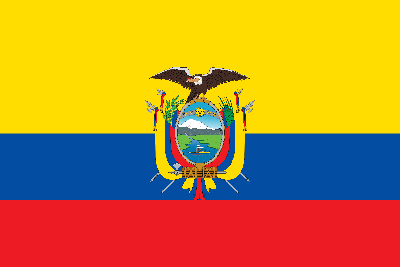
Country Context
HRF classifies Ecuador as democratic.
Ecuador transitioned from military rule to democracy in 1979. Since then, the country has experienced periods of political instability, including the ouster of three presidents in 1997, 2000, and 2005. In 2007, left-wing authoritarian President Rafael Correa was elected and his decade-long tenure was marked by the significant and dangerous erosion of democratic institutions. Correa undermined electoral competition by removing presidential term limits through a 2015 constitutional amendment, allowing indefinite reelection. Freedom of dissent was curtailed by passing the 2013 Organic Law on Communications, which led to sanctions on critical media and journalists, and by repressing peaceful protests, often charging demonstrators with sabotage or terrorism. Lastly, judicial independence was compromised as Correa exerted influence over judicial appointments, turning the courts into tools to silence critics and consolidate power. Correa stepped down in 2017. His hand-picked successor and former vice president, Lenin Moreno, won the 2017 elections. Moreno’s tenure marked a shift from Correa’s policies, as his government took steps to combat corruption, restore trust in institutions, and return to democratic governance.
Key Findings
Since then, national elections are largely free and fair in Ecuador, marked by peaceful alternations in power. More recent electoral wins by right-wing Guillermo Lasso in 2021 and centrist outsider Daniel Noboa in 2023 demonstrated that opposition candidates have a realistic chance of winning.
Private, independent media is widespread and is still largely able to openly criticize and challenge the government in Ecuador, but journalists continuously face threats and violence from organized crime groups.
Since the return to democracy, the judiciary has not become a government tool to repress dissent or undermine electoral competition.
National elections in Ecuador are largely free and fair.
Rafael Correa stepped down in 2017 after serving three consecutive terms (2007-2017), and his hand-picked successor, Lenin Moreno, won the presidency. However, Moreno drastically shifted away from Correa’s policies and undertook a series of reforms to strengthen Ecuador’s electoral and judicial institutions. One of Moreno’s most important initiatives was to call the 2018 referendum, through which citizens voted to restore term limits, which had been eliminated in a 2015 constitutional amendment under Correa. The referendum results mandated that the president can now serve only up to two terms in Ecuador, which effectively barred Correa from reclaiming the presidency. After his tenure came to an end, Moreno did not seek a second term.
In 2021, former banker Guillermo Lasso won the presidential elections with 52.5% of the vote against Correa-backed Andrés Arauz, marking the first time in 14 years that neither Correa nor a candidate associated with Correa became president. Two years into the presidency, Lasso faced significant political challenges, including widespread protests and controversies over economic policies. These issues prompted an attempt by the National Assembly to initiate impeachment proceedings against Lasso. In response, in May 2023, Lasso invoked Article 148 of the Constitution to dissolve the National Assembly, an action also known as “cross-death,” leading to early presidential and legislative elections.
The first round of elections, held on August 20, 2023, involved eight presidential candidates from various political parties. However, as no candidate achieved the minimum votes required for the presidency, a second round took place on October 15, 2023. The two top candidates participated in the runoff: Luisa González from the Citizen Revolution, an ally of former president Rafael Correa who led the first round with 33.61% of the votes, and Daniel Noboa from the National Democratic Action and the son of the country’s richest man, who had received 23.47%. Noboa won the runoff with 51.83% of the votes. The transition of power was peaceful, and Noboa is expected to finish Lasso’s original term, which ends in May 2025.
While the campaign trail was marred by violence, including the assassination of anti-corruption advocate and presidential candidate Fernando Villavicencio, these incidents were attributed to organized crime groups linked to narcotics trafficking rather than government intervention. Thus, the electoral environment, free from direct government manipulation and with large international observation, suggests that the elections were conducted in a manner that allows fair competition.
Independent media, political leaders, civil society leaders, organizations, and regular people are largely free to openly criticize or challenge the government.
The space for criticism and protest in Ecuador is significant. Private, independent media is popular and still largely able to openly criticize and challenge the government. In 2023, however, Ecuador experienced alarming levels of violence against journalists and media workers, with prominent NGO Fundamedios documenting 265 aggressions affecting 343 individuals. Organized crime was responsible for the significant increase in these attacks. The government, while not directly inciting such violence, has been criticized for its inadequate response and failure to protect journalists or pursue justice effectively. This situation, highlighted by the forced exile of nine journalists due to threats in 2023 (and one in early 2024), reflects a growing insecurity in journalism in Ecuador. Although the government under Guillermo Lasso implemented regulations for media protection, these measures have so far lacked sufficient resources and support, highlighting the state’s shortcomings in safeguarding press freedom.
Civil society’s ability to organize and express discontent was exemplified in the June 2022 protests against the Lasso Administration, led by indigenous and social organizations. Although the protests saw violence from both sides, including allegations of excessive use of force and ill-treatment of protesters by security forces, as well as vandalism and the taking of officers hostage in certain areas, the demonstrations culminated in an 18-day national strike that ultimately led to a peace agreement. This agreement, reached after negotiations, saw the government accepting some of the protesters’ demands, illustrating that there’s still room for dissent and dialogue in Ecuador.
The judiciary of Ecuador largely serves as a check on the government. There have not been any recent cases where courts were directly involved in the sway of elections nor in prosecuting government critics.
While there are no explicit recent examples of direct interference from the executive in judicial matters, the history of the country’s judiciary shows instances of political influence and pressure in previous administrations, particularly during the hybrid authoritarian regime of Rafael Correa (2007-2017). During this time, judges were pressured or retaliated against for not ruling in favor of government interests. Lenin Moreno led a process that sought to restore the independence of the judiciary. A 2018 referendum led to the restructuring of the Council of Citizen Participation (CPCCS), and replaced all CPCCS members linked to Correa’s government in 2019. The CPCCS is responsible for appointing the attorney general and the Judiciary Council, responsible for appointing judges. In October 2022, legislators affiliated with Correa’s party Union for Hope (UNES) and the Social Christian Party (PSC) attempted to impeach Judiciary Council members because of the 2019 replacement of CPCCS members as part of the post-referendum reforms aimed at restoring judicial independence, but failed. The absence of clear, recent examples of direct interference under the last and current presidencies suggests either an improvement or at least a reduction in overt interference cases.
The judiciary faces threats from organized crime groups, and violence has increased after Attorney General Diana Salazar, in an effort to curb corruption in the country, launched investigations that linked organized crime groups and drug trafficking to many lawmakers and judges. Nonstate actors have also been implicated in corruption, intimidation, and even assassinations within the judiciary and against judges or judicial officials whose decisions negatively impact the interests of their organizations. Such circumstances create a challenging environment for the judiciary to operate independently and make decisions free from external pressure.