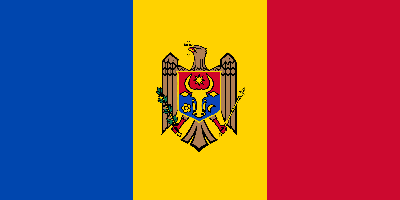
HRF classifies Moldova as democratic.
Elections are largely free and fair, offering a broad range of political alternatives and respecting fundamental democratic freedoms. In November 2023, the government of Moldova imposed election bans on a newly formed pro-Russian party; however, such actions were taken in response to national security concerns over Russia’s efforts to influence Moldova’s electoral process and have been overseen by the domestic courts.
Moldova maintains a robust civil society and a vibrant environment for freedom of speech. While the government’s actions to ban the broadcast of various Russian TV channels throughout 2022 and 2023 have been somewhat scrutinized by the OSCE, such measures need to be evaluated considering national security concerns posed by disinformation of pro-Russian sponsored media.
Within the last few years, Moldova’s continued judicial reform efforts to strengthen the rule of law yielded substantial results. However, the judiciary still falls short of democratic rule of law standards due to endemic corruption and selective justice.
National, parliamentary, and local elections in Moldova are largely free and fair, marked by periodic transfer of power between candidates favoring European integration and proponents of stronger relations with Russia. Nicolae Timofti (elected in 2012) emphasized the European orientation as the country’s priority, Igor Dodon (elected in 2016) pursued closer ties with Russia, and Maia Sandu (elected in 2020) promoted integration with the European Union (EU).
OSCE observers report that the 2020 national, 2021 parliamentary, and 2023 local elections in Moldova have been well organized, voters could choose from a broad range of political alternatives, and fundamental freedoms key to democratic elections, such as freedom of assembly and freedom of expression, were largely respected. However, vote-buying allegations occasionally surfaced throughout all the elections, and sudden changes to the legislation and administrative rules of the November 2023 local elections caused uncertainty amongst voters and concerns of international observers.
In June 2023, Moldova’s Constitutional Court found unconstitutional a pro-Russian Şor Party, headed by the fugitive oligarch, Ilan Shor, who has been implicated in funneling Russia’s funds to Moldova and is sanctioned by the United States and the EU. Nevertheless, in October 2023, the Court allowed the banned party’s members to participate in the 2023 local electoral race if they ran independently from the Şor party.
In November 2023, two days before the local elections, the Commission for Exceptional Situations in Moldova, chaired by the Prime Minister, implemented extensive restrictive legislative measures that banned members of the Chance Party (also known as “ȘANSĂ”), a newly formed pro-Russian party with ties to Ilan Shor, from participating in the 2023 elections. Citing national security concerns, the government based its decision on a report from the Security and Information Service, which revealed various schemes through which Russia attempted to influence Moldova’s electoral process, including through the financing of the Chance Party. According to Moldova’s Prime Minister, Dorin Recean, Russia has been waging a “hybrid war” (political, economic, and social) against Moldova, with Moldova’s Intelligence and Security Service confirming that Russia has spent more than 53 million dollars towards vote-buying, bribing candidates, and fueling anti-Western protests.
Following the imposition of the November 2023 ban, OSCE issued a statement, saying that the government’s decision “limited voters’ choice and resulted in uncontested races in some smaller localities.” However, while the measures taken by the Moldovan government negatively affected electoral competition to some extent, they only affected one opposition party, the Chance Party. Fifty-nine other parties, in addition to unaffiliated independent candidates, were eligible to participate in the elections and continued to have a strong presence throughout various elected offices. In December 2023, the appeals court overturned the government’s ban on the Chance Party. The government appealed the decision, and in March 2024, Moldova’s Constitutional Court found that the government’s actions were unconstitutional.
In Moldova, independent media, political leaders, civil society leaders, organizations, and regular people are largely free to openly criticize or challenge the government. There are more than 12,000 registered civil society organizations, many of which freely participate in domestic policy-making, serve as accountability watchdogs, and advocate for political and financial transparency. Attacks against journalists are rare in Moldova, and citizens are free to voice dissent and participate in street demonstrations and protests without the fear of government repression.
While Moldova’s media market is diverse, people have access to a variety of content, and media transparency laws were enacted in the country in 2015, several people associated with the government and political parties, such as Vladimir Plahotniuc, the former First Vice President of the Moldovan Parliament, Igor Dodon, the former President of Moldova, and Ilan Shor, the leader of the banned Shor Party, were able to shape media outlets’ narratives due to their beneficial ownership or political affiliation with the owners of the outlets.
Additionally, politicians, including the former President Igor Dodon, tried to exert pressure on the media by filing defamation lawsuits against independent media outlets. Most notably, in 2016, Igor Dodon and his party, the Party of Socialists of the Republic of Moldova (PSRM), filed a defamation proceeding against RISE Moldova, a Moldovan NGO, which published an article ahead of the 2016 presidential elections relating to the financing of Dodon and PSRM by an offshore company with Russian ties. First, the district court ruled in favor of PSRM, and the judgment was upheld on appeal; however, after the NGO brought the case to the European Court of Human Rights (ECtHR), the appeals court examined the case anew and dismissed the defamation action for being ill-founded in December 2017. In October 2021, ECtHR ruled in favor of RISE Moldova, finding that the outcome of the appeals court’s decision amounted to an acknowledgement of the breach of the journalists’ right to freedom of expression.
In recent years, the country’s performance across various press freedom indices has seen significant improvement, and Moldova’s independent media has grown in strength and significance. According to Reporters Without Borders’ World Press Freedom Index, Moldova ranked 28th in 2023, compared to 89th in 2021. In March 2023, the OSCE Representative on Freedom of the Media reported that Moldova continued taking steps towards democratic reforms and remained committed to the respect of freedom of expression, even amidst national security risks.
After the full-scale invasion of Ukraine, Moldova has seen a rise in disinformation about the war in Ukraine and content promoting Russia’s interests. For example, a series of “deep fake” publications appeared on social media, such as the video of President Sandu announcing her resignation two days before the elections, calling to vote for a Shor candidate, or a recording of President Sandu discussing Moldova’s military mobilization against Russia with Ukraine’s prime minister. To limit the spread of disinformation, throughout 2022 and 2023, Moldova’s Information and Security Service blocked a number of Russian news agencies functioning in Moldova, such as Sputnik Moldova, Interfax, and TASS, in addition to suspending licenses of six TV Stations owned by or associated with Ilan Shor. In addition to promulgating legislation that banned the Russian television news broadcasts and websites that were spreading false narratives about the war, in June 2023, President Maia Sandu announced the creation of an anti-propaganda center aimed at countering disinformation.
While some international organizations criticized the government’s actions as restrictions on the freedom of speech, these measures need to be assessed in the context of national security threats posed by Russia’s military invasion of neighboring Ukraine and substantial funding of disinformation and pro-Russian information campaigns in Moldova.
While improving the institutional framework to ensure effective access to justice has been one of the priorities on Moldova’s reform agenda since 2010, the country’s judicial system has long been marred by state capture, selective justice, and susceptibility to corruption. During the period of 2013 and 2019, Moldova experienced state capture orchestrated by oligarchs and elites, most notably attributed to Vladimir Plahotniuc, who exerted control over the government through law enforcement, judiciary, policymaking, and major media outlets. Laws were often selectively enforced for politically motivated reasons, and courts commonly failed to investigate cases of political corruption and postponed hearings of wealthy or well-connected defendants.
Due to state capture and usurpation of power, high-ranking officials have frequently engaged in corrupt practices and enjoyed impunity. For example, Vladimir Plahotniuc and Ilan Shor perpetrated large-scale fraud and money laundering between 2012 and 2014 ,which resulted in a billion-dollar bank theft from Moldova. Despite being investigated for their involvement in the scandal, Plahotniuc managed to stay in power due to his influence over the governmental branches and by stalling the process of investigation, while Shor was first sentenced but then allowed to remain free and politically active during the appeal process. In 2019, after the major political crisis caused by months of political deadlock due to hung February 2019 parliamentary elections and resulting in a change of government in Moldova, Plahotniuc and Shor fled the country after facing criminal charges, which barred them from being held accountable. The administration of President Maia Sandu renewed the efforts to seek justice and made extradition requests to the United States, Turkey, and Israel for both Plahotniuc and Shor.
In January 2021, the Parliamentary Assembly of the Council of Europe (PACE) expressed its concern over Moldova’s slow progress in reforming the judiciary, in particular, in the field of corruption prevention in respect of members of parliament, judges, and prosecutors. In March 2022, as part of its reform efforts of the judiciary and prosecution, the government of Moldova adopted the “pre-vetting law,” aimed at improving the procedures of evaluating and appointing judges and prosecutors. In March 2023, as part of a broader effort to tackle endemic corruption in the country, President Maia Sandu announced the creation of a new Anti-Corruption Court, which will hear major corruption lawsuits and cases of crime within Moldova’s judicial system.
In September 2023, the OSCE Office for Democratic Institutions and Human Rights (ODIHR) found that Moldova has been making progress with its judicial reform. In November 2023, the European Commission highlighted the country’s progress towards strengthening democracy and the rule of law, commending Moldova for completing six out of the nine recommendations relating to the justice sector set out in the Commission’s September 2022 opinion, covering 94% of the requirements on its path to EU accession.
As judicial reforms in Moldova are still underway, it is challenging to provide a definitive evaluation of Moldova’s judicial independence. However, HRF assesses that at this stage, the judiciary in Moldova falls short of the full assurance of such independence.