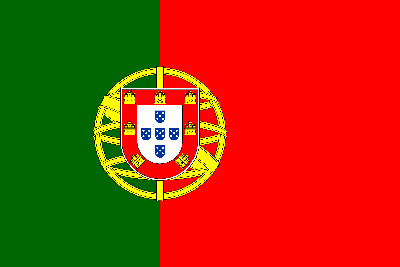
HRF classifies Portugal as democratic.
National elections are largely free and fair. Robust campaign finance regulations, equitable media representation, and the absence of a specific threshold for entering Parliament contribute to highly competitive elections, in which a variety of political parties can gain power.
Independent media, political leaders, civil society leaders, organizations, and regular people are largely free to openly criticize or challenge the government. Concerns over recent media ownership concentration notwithstanding, Portugal has a large number and variety of independent outlets, and authorities largely refrain from interfering with the work of civil society organizations or obstructing peaceful demonstrations.
The judiciary largely serves as a check on the government. The courts have made progress in addressing corruption, despite shortcomings in Portugal’s implementation of its national anti-corruption strategy. However, the courts’ handling of defamation and slander cases has been frequently challenged as inconsistent with freedom of expression as outlined by the European Convention on Human Rights.
In Portugal, national elections are largely free and fair. A level electoral playing field and the absence of a specific threshold for entering Parliament allow various, including small and single-issue, parties to gain power. As a result of the large number of parties entering Parliament (typically 8-9) and the relatively small margins of victory, coalition governments, rather than one-party rule, are common. Since the 1974 Carnation Revolution overthrew the authoritarian Estado Novo regime and reintroduced political pluralism in Portugal, the Socialist Party (PS) and the center-right Social Democratic Party have frequently alternated as winner and runner-up in national elections, with peaceful power transfers.
The Organization for Security and Co-operation in Europe (OSCE) assessed the 2022 snap elections, triggered by a collapse of the minority government of the Socialist Party and two smaller center-left parties, as competitive and well-conducted.
In November 2023, the Public Prosecutor’s Office initiated an investigation into Prime Minister Antonio Costa and several members of his cabinet following allegations of corruption and graft involving state energy and mining concessions. Costa resigned shortly after that, prompting President Marcelo Rebelo de Sousa to call another snap election scheduled for March 2024.
Independent media, political leaders, civil society leaders, organizations, and regular people are largely free to openly criticize or challenge the government. Though the five most prominent media groups (Impresa, Cofina, Media Capital, Global Media, and RTP) jointly occupy more than half of the market, Portugal has more than 300 other media companies and 1,700 independent print publications.
Nevertheless, defamation and slander remain criminal offenses, and local courts have occasionally imposed disproportionate fines upon journalists and civil society leaders who openly criticize the government. A significant number of these convictions are under articles of the Criminal Code that the European Court of Human Rights (ECtHR) and other international observers have repeatedly criticized as inconsistent with EU-level case law and protections of the freedom of expression, such as Article 184 (“aggravated defamation against a public official”) and Art. 187 (“insulting a public body or legal entity”) To illustrate, in 2013, the Supreme Court upheld on appeal the earlier decision of the Lisbon Court of Appeals ordering prominent journalist Emidio Arnaldo Freitas Rangel to pay a 56,000 EUR fine (approximately 74,000 USD at the time) for criminal defamation, or serve 200 days in prison in case of insolvency. The fine was prohibitively high compared to Portugal’s average household income in 2013 – about 24,000 USD per year. Rangel had criticized the judiciary and insinuated possible collusion between professional judges’ associations and the Prosecutor’s Office during a parliamentary hearing in 2010. In response, the Professional Association of Judges (ASJP) and the Professional Association of Public Prosecutors (SMMP) pressed criminal charges for “insulting a legal entity”, invoking Art. 187. In 2022, ECtHR ruled that the Portuguese Supreme Court’s decision in the Rangel case violated the freedom of expression (protected under Article 10 of the European Convention on Human Rights), considering the narrower scope of acceptable restrictions upon political speech or debate on “matters of public interest” and that the punishment was disproportionate to any potential damages caused. The Rangel case was one of 9 between 2014 and 2023 in which the ECtHR ruled that domestic Portuguese courts had violated Article 10. In a monitoring report covering the prior decade (2005-2015), the International Press Institute placed Portugal among the top 5 EU countries with the most Article 10 violations. Despite the potential chilling effects of such rulings, international observers, such as Reporters without Borders and the International Press Institute, assess that direct political interference in media and self-censorship among journalists remain limited.
Civil society organizations operate unobstructed by the authorities, in spite of the inflammatory rhetoric occasionally employed by far-right politicians to discredit those who work on anti-racism and LGBTQ+ issues. Recent peaceful demonstrations, such as rallies supporting Ukraine and women’s rights marches, proceeded without disproportionate government interference, indicating the adequate guarantee of the freedom of assembly.
In Portugal, the judiciary is largely independent and has the capacity to hold public officials accountable and check attempts to unfairly skew electoral competition or erode the freedom of dissent. An impartial High Council of the Judiciary appoints, promotes, and transfers judges in the common courts. As a two-thirds parliamentary majority is required to elect Constitutional Court Justices, no single party in Portugal’s typically fragmented national assembly can unduly influence appointments.
In the last decade, no electoral complaints (regarding candidate registration, voting, and tabulation procedures, etc.) have reached the courts, according to OSCE data, reflecting the professional integrity of the National Election Commission and lower election administration bodies. On the other hand, international observers assessed that dispute resolution mechanisms are effective and transparent, should such complaints arise.
While journalists enjoy comprehensive legal protections, the judiciary occasionally fails to check attempts to unduly restrict their freedom of expression or otherwise interfere with their work. As evident from the ECtHR’s Freitas Rangel vs. Portugal ruling discussed above, the courts have, in some instances, disproportionately and unfairly penalized journalists for exercising their freedom of speech. In addition, public officials who unduly interfere with the work of journalists have sometimes evaded accountability. To illustrate, in 2021, it transpired that the Security Police Department (PSP) had surveilled two journalists between April and May 2018 without a court order. Public prosecutor Andrea Marques had ordered continuous monitoring of the journalists’ bank transfers and phone communications as part of a broader investigation into information leaks in the judiciary. Though the surveillance was unlawful, as it required prior authorization by a judge, authorities have yet to conduct a thorough investigation of the prosecution’s conduct and sanction Marquez, as of 2024.
On the other hand, Portugal has recently made progress in combating corruption and holding public officials accountable. In 2022, in what came to be known as “Operation Lex,” the Supreme Court charged three former judges with “crimes of passive and active corruption, undue receipt of advantage, and abuse of power,” among other offenses. If it results in convictions, the trial, ongoing as of February 2024, will establish a precedent of holding high-ranking judiciary members accountable. Several notable trials against political elites accused of corruption are underway, albeit hampered by delays and shortcomings in the prosecution’s presentation of evidence. A prime example is the ongoing trial against former Prime Minister José Sócrates (2005-2011), who was arrested in 2014 due to suspected graft and money laundering. Sócrates spent nearly a year in detention altogether (in jail and under home arrest) until his conditional release in 2015. In January 2024, overturning a lower-court ruling from 2021, which found the prosecution’s case for passive corruption was flawed, the Lisbon Court of Appeal ordered Sócratesto to stand trial for this offense, together with 13 counts of money laundering and fraud.