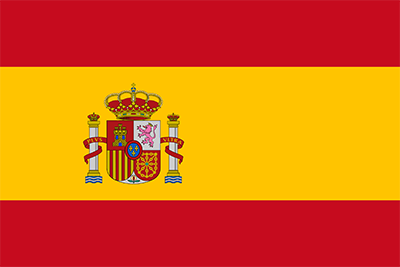
HRF classifies Spain as democratic.
National elections are largely free and fair. Though two main parties – the People’s Party (PP) and the Socialist Workers’ Party (PSOE) – have dominated the political scene since Spain democratized in the 1970s, various other political groups compete on an equal footing, as illustrated by the large number of parties typically represented in Parliament.
Independent media, political leaders, civil society leaders, organizations, and regular people are largely free to openly criticize or challenge the government. Despite ongoing challenges, such as the widely criticized restrictions on reporting on law enforcement introduced in 2015 and the occasional harassment of critical journalists by police, Spain has a vibrant media sector. Civil society is robust, and freedom of assembly is generally upheld in practice, although participants in peaceful “unauthorized” demonstrations risk incurring fines under the widely criticized Public Safety Act of 2015.
The judiciary largely serves as a check on the government. It holds government officials accountable and can provide effective legal remedy for encroachments upon fair electoral competition and the freedom of expression.
In Spain, national elections are largely free and fair. As parties compete on an equal footing, elections tend to be highly competitive and rarely result in landslides. To illustrate, the Organisation for Security and Co-operation in Europe (OSCE) assessed the electoral campaign preceding the 2023 snap parliamentary elections as “vibrant and pluralistic,” offering voters a wide range of choices. The PP’s small margin of victory in 2023, 33.3% vs the PSOE’s 31.9%, together with the presence of nine other parties in Parliament, further underscores the robustness of electoral competition.
This relative parity between parties with competing, at times opposing, policy agendas complicates the formation of lasting governing majorities. Successful no-confidence votes and government reshuffles were ubiquitous in the early and mid-2010s when PP and PSOE often struggled to rally parliamentary support on critical issues, such as the state budget.
Factors potentially contributing to the robustness of electoral competition in Spain include the effective independence of the Central Election Commission (CEC), which oversees all lower-level electoral administrative bodies, reviews the voter census, and monitors political actors’ compliance with the Electoral Law, and comprehensive campaign finance regulations significantly expanded in the 2010s. The majority of the CEC’s members (8 out of 13) are appointed by a lottery administered by the General Council of the Judiciary from a pool of eligible judges. The remaining five are parliamentary nominees. The CEC has also sanctioned high-ranking politicians for violating the “principle of neutrality” enshrined in the electoral code by campaigning in their official governing capacity. In 2019, for instance, CEC fined Prime Minister and PSOE leader Pedro Sánchez for giving an interview from his formal residence in which he lauded his party’s achievements. As briefly discussed under the Judicial Independence pillar, Sánchez subsequently lost his appeal of the fine before the Supreme Court.
Independent media, political leaders, civil society leaders, organizations, and regular people are largely free to openly criticize or challenge the government. Spain’s media sector is diverse, albeit plagued by some ongoing issues: the high concentration of media ownership, reporting restrictions that arguably undermine scrutiny of law enforcement and other authorities, and sporadic instances of harassment against journalists covering peaceful demonstrations, among others.
Though the country has many independent outlets, the top four TV groups – the public broadcaster RTVE and the privately owned Atresmedia, Mediaset, and CCMA – control nearly 95% of the advertising market. The RTVE is heavily dependent on state subsidies as its primary source of funding. In addition, lawmakers lowered the parliamentary threshold for appointing the broadcaster’s executive board in October 2024. Watchdogs, such as the International Press Institute, urged parliament to retract the law, raising concerns that it would undermine the RTVE’s fragile impartiality.
Critical journalists remain vulnerable to harassment by police while covering peaceful demonstrations and steep fines under the restrictive 2015 Public Safety Act (dubbed “the gag law” by local watchdogs) for “endangering” law enforcement through their reporting. Police beat or detained a number of media workers reporting on mostly peaceful pro-independencе protests in the autonomous region of Catalonia in 2019, for instance. Albert Garcia, a reporter with the national daily El País, was arbitrarily detained for 24 hours after photographing the arrest of a protester without obstructing or threatening law enforcement in the process, while others, such as Elise Gazengel (CTXT magazine) and Pol Pareja (Eldiario.es) were hit with batons by police while peacefully reporting on the October 2019 demonstrations in Catalonia despite wearing bracelets indicating they were accredited journalists. The Committee to Protect Journalists (CPJ) has reported that between 2015 and 2020, the most recent year with available data, authorities issued close to 400,000 fines under the law for the vaguely defined offenses of “disobeying, disrespecting, or resisting authorities.” Though official records do not allow for estimating what share of these fines targeted journalists, the CPJ and other observers believe media workers have been disproportionately penalized. In one of several particularly concerning instances, Pulitzer-winning photojournalist Javier Bauluz received fines totaling nearly 1,000 USD for “resisting police authority” in 2020. Bauluz had declined to identify himself and hand over his camera when law enforcement approached him and questioned him about his activities. At the time of the incident, Bauluz was documenting the degrading treatment of migrants by public officials on the Canarian island of Arguineguín, which has seen an influx of migration since the early 2010s. These challenges notwithstanding, multiple outlets remain vocal in criticizing the government’s policies and investigating possible wrongdoing by authorities, as reflected in Spain’s favorable overall assessment by leading media observers, such as Reporters without Borders.
With more than 30,000 registered NGOs, Spain has a robust civil society. Freedom of assembly is also generally upheld in practice, despite provisions in the 2015 Public Safety Act that sanction participation in “unauthorized” demonstrations near key infrastructure and government buildings, punishable by fines of up to $600,000. Concerning these possible sanctions, there are no indications that they have been systematically abused to target peaceful protesters.
In Spain, the judiciary largely checks the government. A 20-member General Council of the Judiciary (CGPJ) appoints, promotes, and transfers judges serving on the lower courts. Twelve CGPJ members are judges appointed by a two-thirds parliamentary majority. While preventing any party from single-handedly undermining judicial oversight, these procedures have arguably hampered the CGPJ’s efficacy in some instances: In 2018, the PP party, in opposition at the time, declined to support the governing parties’ nominees, effectively blocking the constitutionally outlined renewal of the body’s membership. While the incumbent members remained on the CGPJ, in 2023, the Constitutional Court ruled that the CGPJ could not make any new judicial appointments without a renewed parliamentary mandate. Hence, there have been no new judicial appointments since the ruling. As of 2024, PP and PSOE have not reached a compromise on renewing the CGPJ, which has impeded judicial appointments and, arguably, the efficacy of the judiciary as a whole. According to February 2024 estimates, 25% of seats on the Supreme Court and 42% of presidential positions on lower courts remained vacant.
While election complaints are rare, international observers, such as the OSCE, have assessed the legal framework for electoral dispute resolution as sound. According to local experts, the Supreme Court’s 2022 ruling upholding the CEC’s fine against PSOE leader Pedro Sánchez set an important precedent that could dissuade other public officials from unfairly abusing administrative resources to secure a campaign advantage.
The Spanish courts have a strong track record of upholding the freedom of dissent. Yet, the Constitutional Court upheld most of the 2015 Public Savery Law’s provisions in 2020, including articles that sanctioned “showing disrespect” (Art. 37) and “disobeying” (Art. 36) police. International experts, such as the Venice Commission, have criticized these and several other articles as vaguely defined and entrusting law enforcement with exceedingly broad powers, with few guidelines. At the same time, as of the Commission’s latest opinion (2021), only a small number of penalties under the Law have been appealed, hampering a definitive assessment of the courts’ interpretation and application of the Law.
Spanish courts also have a strong track record of holding public officials accountable for abuses of power, including corruption and graft. Prominent examples include the 2013 trial and conviction of Luis Bárcenas, former treasurer of the PP party and ally of Prime Minister Mariano Rajoy. Bárcenas was sentenced to 33 years’ imprisonment for money laundering and fraud, having organized a lucrative public procurement scheme. Equally important, Spain’s highest criminal court found that the PP had kept a parallel bookkeeping system to process illegal donations under Bárcenas’s supervision, and used some of the funds as bonuses for senior members. The court fined the party nearly $250,000, an unprecedented amount at the time.